Wall protection systems cost $30–$150 per square meter in 2026, depending on type and material. Prices vary widely by system, material, and installation method. This guide breaks down costs by system type, material, installation, and key price factors. Pinger offers tailored quotes across its wall protection range.
|
Unit |
Equivalent |
|---|---|
|
1 square meter |
10.7639 square feet |
One square meter equals 10.7639 square feet, so wall protection cost per square foot is easy to compare.
Wall protection costs $30 to $150 per square meter in 2026. Compare system types and materials before choosing.
Labor makes up 65 to 75 percent of installed cost. Surface-mounted guards allow capable teams to DIY. They save half the price.
Thickness, custom colors, fire ratings, small orders raise per-square-meter prices. Request multiple quotes with volume discounts to cut costs.
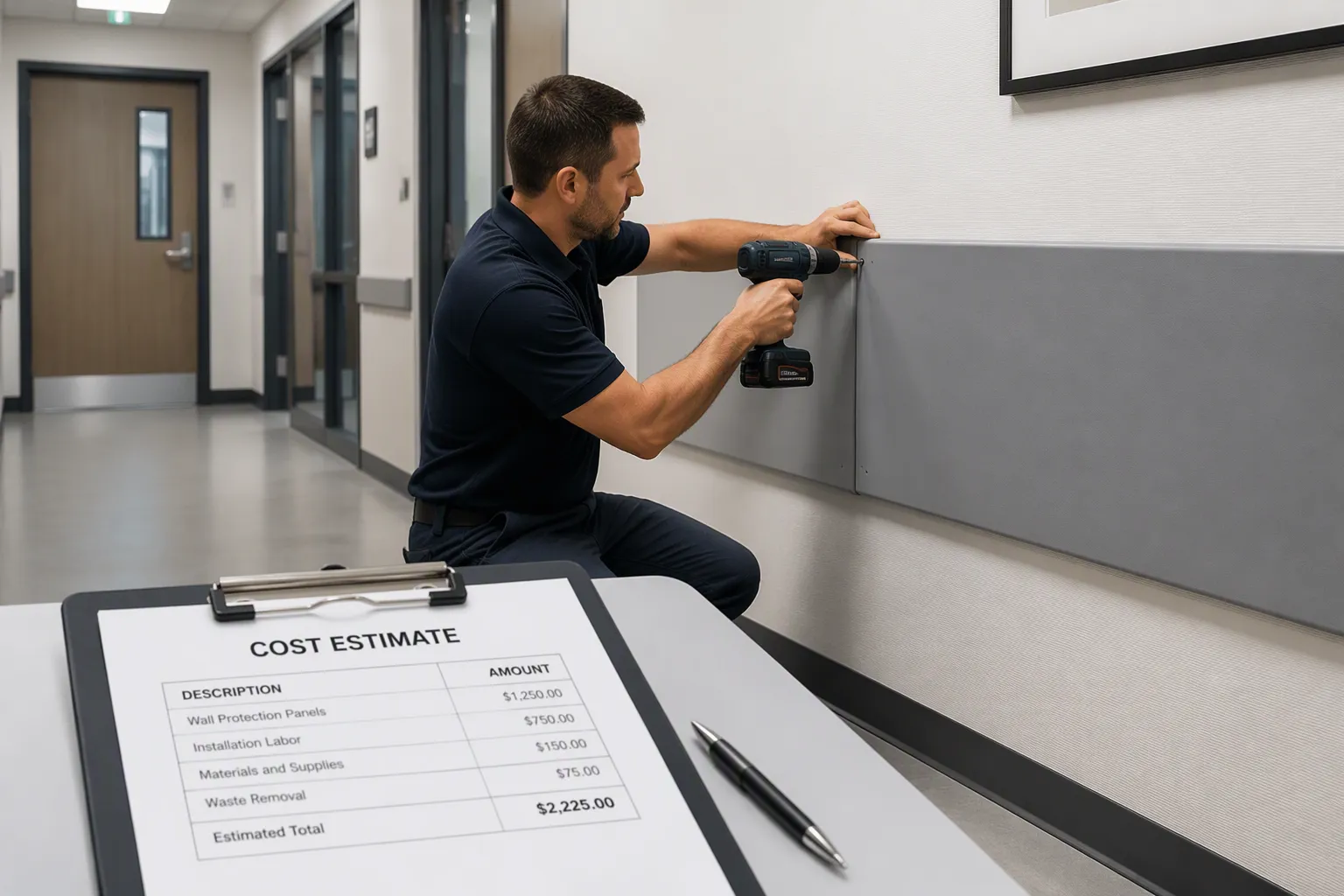
Wall protection pricing depends heavily on the system a buyer selects. Each type serves a distinct purpose and carries its own cost profile.
Wall guards protect broad wall surfaces from carts, gurneys, and furniture. In 2026, wall guards cost $35–$90 per square meter. Corner guards shield the most vulnerable points in a building, where two walls meet. Corner guard prices range from $25–$70 per square meter. Surface-mounted corner guards sit at the lower end. Full-wrap and custom-bend models push toward the upper end.
These figures compare favorably to alternative wall construction. Drywall installation costs $16.15–$37.67 per square meter. Tilt-up concrete runs $150.70–$344.45 per square meter. Wall guards and corner guards therefore cost more than drywall but far less than tilt-up concrete. They also add impact resistance that drywall alone cannot provide.
Pinger offers wall guards and corner guards with competitive per-square-meter pricing. Buyers can request a quote for any wall length or corner count.
Handrails serve two roles: physical support and wall protection. A handrail absorbs constant contact from hands, equipment, and cleaning tools. In 2026, handrail systems cost $40–$120 per square meter. The price depends on bracket spacing, rail diameter, and material. Vinyl handrails sit at the low end. Stainless steel handrails with heavy-duty brackets reach the high end.
Sheet goods cover large wall areas with a single continuous material. Rigid vinyl sheet, acrylic sheet, and high-pressure laminate all fall into this category. Sheet goods cost $30–$85 per square meter. Thicker sheets and custom colors raise the price. Fire-rated sheets also add cost.
The same context applies here. Drywall at $16.15–$37.67 per square meter costs less upfront. Tilt-up concrete at $150.70–$344.45 per square meter costs far more. Handrails and sheet goods occupy the middle ground. They deliver durability and easy cleaning at a moderate price point.
Pinger supplies handrails and sheet goods across its full product line. Each system comes with transparent per-square-meter pricing and volume options.
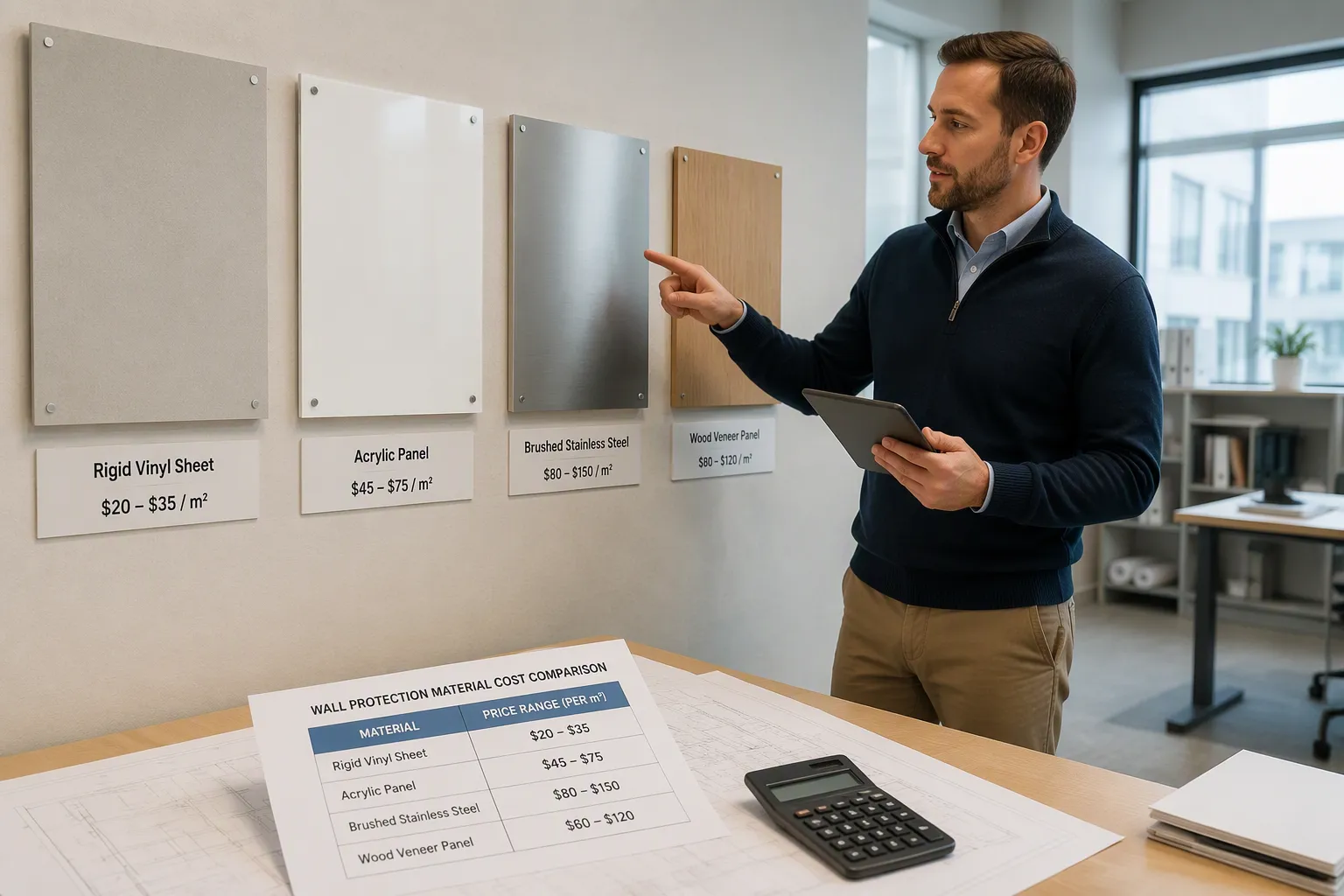
Material selection drives a large share of total project cost. Vinyl, acrylic, stainless steel, and wood each carry distinct price points and performance traits. Buyers who understand these differences can match the material to the environment and the budget.
Vinyl is the most economical wall protection material. Standard rigid vinyl sheet costs $30–$55 per square meter. Vinyl resists moisture, cleans easily, and handles moderate impact. These traits make it a common choice for corridors, patient rooms, and food service areas. Acrylic costs slightly more, at $45–$80 per square meter. Acrylic offers better clarity and a glossier finish. It also scratches more easily than vinyl. Healthcare buyers often request pricing for hospital wall cladding cost when comparing these two options, because both materials meet the hygiene and durability demands of medical facilities.
Stainless steel sits at the premium end. Stainless steel wall protection costs $90–$150 per square meter. The price reflects raw material cost, fabrication, and a brushed or mirrored finish. Stainless steel excels in high-traffic zones, commercial kitchens, and laboratories. Wood wall protection costs $60–$110 per square meter. Wood brings warmth and architectural character. It requires sealing and more frequent maintenance than synthetic options.
Material choice can shift the price by 2–4x. RSMeans 2026 illustrates this spread in construction generally: residential work runs $1,614.59–$4,843.75 per square meter, while commercial work runs $2,152.78–$6,178.48 per square meter. Wall protection follows a similar pattern. A buyer who selects vinyl instead of stainless steel may cut material cost by more than half.
|
Material |
Cost Range (per square meter) |
|---|---|
|
Vinyl |
$30–$55 |
|
Acrylic |
$45–$80 |
|
Wood |
$60–$110 |
|
Stainless steel |
$90–$150 |
Pinger provides material samples and per-square-meter quotes for each option. Buyers can compare finishes, thicknesses, and lead times before committing. This step prevents costly mid-project changes and keeps the specification aligned with the facility's needs.
Labor dominates the installed price of any wall protection system. Professional installation runs $20–$65 per square meter, and labor accounts for 65–75% of the total cost, mirroring drywall work. A wall guard quoted at $50 per square meter may therefore carry $35 or more in labor alone. Crews charge more for tall walls, occupied facilities, and after-hours work.
Wall protection belongs inside the broader project budget. Mechanical, electrical, and plumbing (MEP) costs typically consume 20–25% of total commercial construction cost. HVAC systems alone can reach 8–15% of project cost.
Depending on the type of building, HVAC systems can be 8-15% of the total project cost.
MEP engineering fees add another 5 to 15% of construction cost, and that range can equal or exceed the architectural fee on hospitals, laboratories, and data centers. Facility managers should reserve wall protection funds alongside these line items rather than treating them as an afterthought.
Surface-mounted wall guards, corner guards, and sheet goods suit capable maintenance teams. These systems use mechanical fasteners and require no wet trades. A DIY crew avoids the $20–$65 per square meter labor charge and pays only for materials, tools, and fasteners. That saving often reaches half the installed price.
|
Construction Phase |
Typical Cost Percentage |
|---|---|
|
Site prep & excavation |
5% – 10% |
|
Foundation & slab |
10% – 15% |
|
Structural frame |
20% – 25% |
|
Roofing & exterior envelope |
10% – 15% |
|
Electrical + plumbing + HVAC (MEP) |
20% – 25% |
|
Interior finishes |
10% – 20% |
|
Fire protection & safety |
3% – 8% |
|
Exterior work |
5% – 10% |
|
Inspections & closeout |
1% – 3% |
Handrails and stainless steel systems demand precise anchoring and alignment. Those jobs favor trained installers. Pinger supplies installation guides and contractor referrals for buyers who want either path.
Thickness directly raises the per square meter price. A 1.5–2.0 mm panel suits small interior panels and low-risk zones at lower material cost. A 2.5 mm panel balances cost and stiffness for standard exterior projects. Commercial facades, schools, and malls often specify 3.0 mm, which carries higher material cost and stronger panel behavior. Large panels, high-wind zones, and impact-prone areas need 4.0 mm or more, the highest cost tier with heavier packing and more fabrication load.
Custom colors and finishes add another layer. PVDF coating costs more than basic powder coating and suits coastal or high-UV facades. Anodizing can run higher still, with color limits. Wood grain and stone texture finishes exceed standard colors and require sample control. Fire rating matters most in regulated facades.
No fire document may delay approval for public or high-rise projects.
Larger orders reduce the per square meter cost. Volume discounts reward buyers who consolidate a full facility's needs into one specification. Wall height adjustment tables, as in the 2026 National Building Cost Manual, refine estimates because taller walls need more material and stronger anchoring. For comparison, reinforced retaining walls cost $24–$38 per square foot, and precast concrete panels run $30–$55 per square foot. These figures help readers frame wall protection budget planning against related wall types.
Pinger offers volume discounts and custom color options with transparent per-square-meter pricing.
Wall guards run $35–$90 Per Square Meter. Stainless steel reaches $150. Corner guards start at $25. Handrails span $40–$120. Vinyl and acrylic sheet goods cost $30–$80. Installation plus customization can significantly alter totals. Buyers should request multiple quotes before committing. Pinger offers competitive pricing, expert guidance, and a personalized quote for any specification.
How much does wall protection cost depends on the system. Vinyl sheet starts near $30 per square meter. Stainless steel reaches $150. Most installed systems land between $30 and $150.
Yes. Labor runs $20–$65 per square meter. Labor accounts for 65–75% of the total installed price. DIY crews skip this charge on surface-mounted guards and sheet goods.
Thickness, custom colors, and fire rating add cost. Stainless steel and wood cost two to four times more than vinyl. Small orders also carry a higher unit price.


 IPv6 Netzwerk unterstützt
 English
 français
 Deutsch
 русский
 italiano
 español
 português
 العربية
 한국의
한국의 Tiếng việt
 Indonesia
 中文
中文